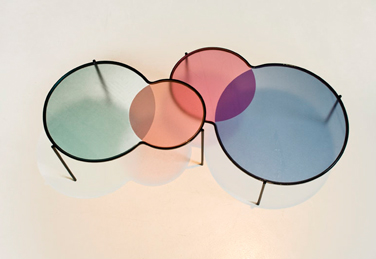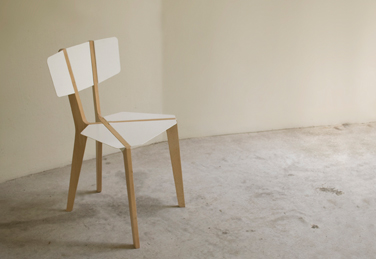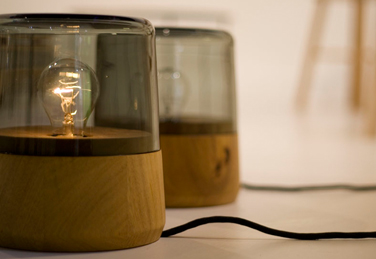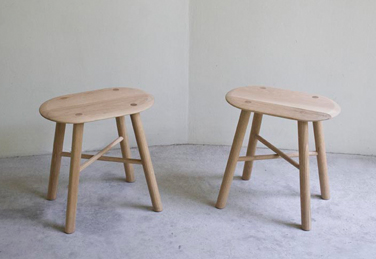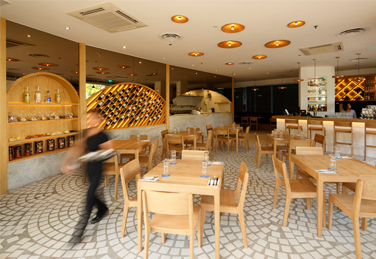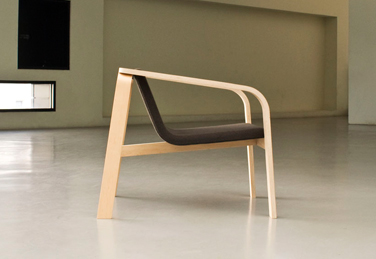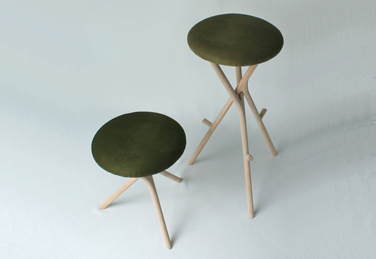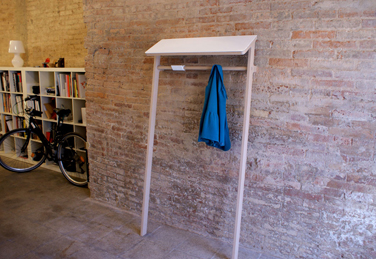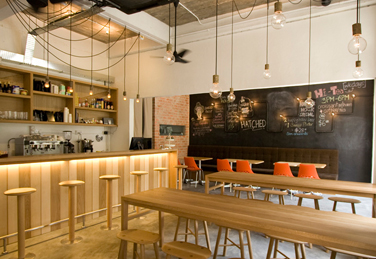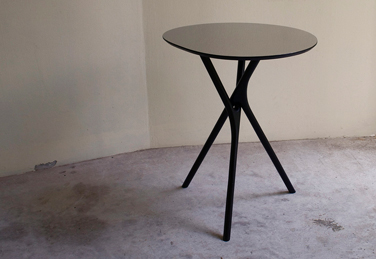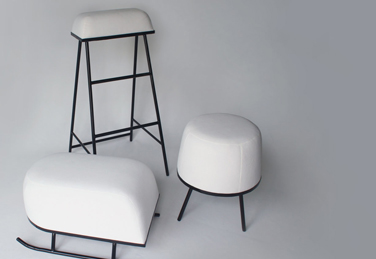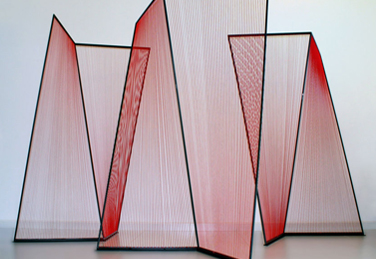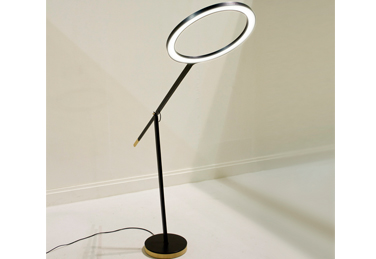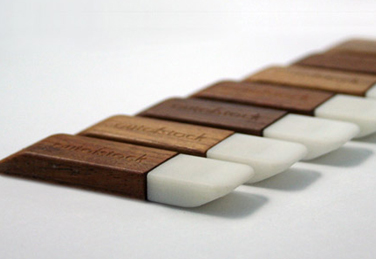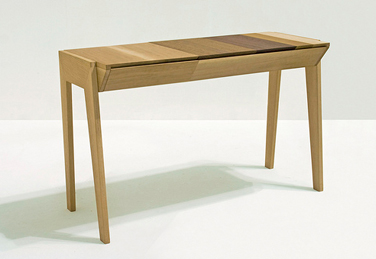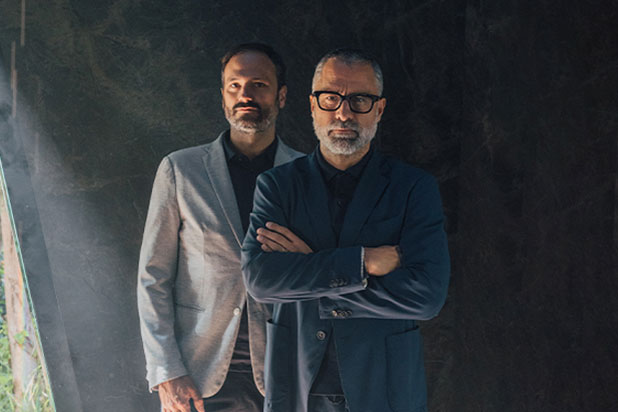

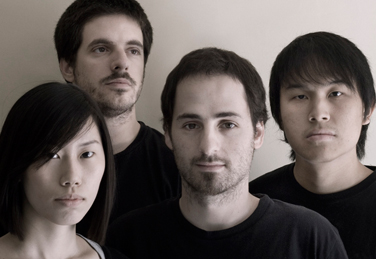
Its four members are scattered across three continents yet work closely. Sebastián Alberdi lives in Barcelona, Gustavo Maggio in Buenos Aires and Gabriel Tan and Wendy Chua in Singapore. Thanks to the internet, they are in constant communication and they meet at the international design fairs. Their clients include Ligne Rose and the Singapore-based firm Foundry for which Outofstock has create the Glide chair, made of walnut.
Interiors From Spain: Outofstock is a multicultural studio. How do you get in contact with each other? What advantages does being multicultural bring?
Outofstock: We met in an unexpected way during a workshop organised in Stockholm by Electrolux in 2005. We connected in a very special way from day one. We later had several conversations and went skiing together in Andorra. That’s how Outofstock came to exist.
There are lots of advantages to our multicultural set-up, from the opportunity we have to communicate our experiences and customs to each other on a daily basis to the clear strategic benefit that comes from physically living on three different continents. Other benefits include being able to contact different clients scattered across Europe and Asia in a more efficient way and to be able to exploit different technologies and media in order to develop our new concepts.
IFS: Do you think Outofstock has a style? If so how would you describe it?
Outofstock: I think it’s unwise to comment on this as it’s very early days for us. We’re still a very young studio and have only been in business for three years. Hopefully in a couple of years, and with more projects under our belt, we’ll have a discernible style.
Our main objective is to create innovative, functional objects made by using materials and resources intelligently. We hope our products can make a home look more beautiful as well as more comfortable to live in.
IFS: Which designers can you relate to the most and admire most?
Outofstock: Without a doubt, Alvar Aalto, Achille Castiglioni and George Nelson. But we also admire the work of such contemporary designers as Jasper Morrison, Naoto Fukasawa and the Bouroullec brothers.
IFS: When you embark on a new product, what’s your preferred methodology?
Outofstock: When a company commissions something, the first step is to ensure we get to know our client very well. When we’re working on a project we’re going to make ourselves, we weigh up several factors: our objectives, what new territory we want to explore and the budget we have to play with.
After that, we begin our an investigation which is as much about conceptual thinking as it is studying the business side. We aim to find out what similar things have been created so far as well as which opportunities exist which won’t harm the environment. This work is carried out by each of us individually, then we’ll have a brainstorming session to help us reach some conclusions collectively. In this way, we reassure each other that the investigation will be more varied and reflect the different viewpoints of all team members.
The process of developing products, once we’ve completed the conceptual stage, then turns into a constant to-ing and fro-ing among the team members with the sole objective of finding the best solution for the project in question.
IFS: Among your various future projects are plans to collaborate with French, German and Singaporean companies. Do you have any plans to collaborate with a Spanish company?
Outofstock: Unfortunately, we haven’t had the opportunity to collaborate with a Spanish company but we’re sure that sooner or later we’ll do so. We love the work of several Spanish lighting companies, such as Metalarte and Vibia, which are constantly innovating and collaborating with young designers.
IFS: What do you think of the world of design in general today and of Spanish design in particular? What do you think are the design trends of the future?
Outofstock: We think that in recent years, the rules of the market have changed quite a lot and that consequently the way designers work and move forward has too. We also believe that collaboration is a key buzzword today. It’s now very common to talk about designers who share a space, project and even clients.
Despite all the economic troubles we’re still navigating, we’re pleased to say that, in response to these, there are still companies which want to take risks and which are prepared to invest heavily in design.
From our perspective, Spanish design is still thriving but we feel bad about the fact that so much of this creativity cannot find an outlet on the market. As for the future, we’d like to think that the current trend for saving on materials and natural resources will continue.
Aesthetically, it’s difficult to predict what our own design will be like in the future. At the moment, we’re seeing how the message of getting back to basics and eliminating any extreme form of visual superfluity or structural waste from products is getting through to most companies. Be this the result of the economic downturn or not, it’s a good thing. But then as we know, everything changes, so it would be risky to bet on this…