
The superb qualities of the ceramic have made this material an indispensable element of the most cutting-edge architecture and interior design projects.
Having investigated the latest advances in this field, here is a lowdown of the sector’s most inventive ideas, incuding new textures, formats and uses – as seen in the latest Cevisama fair of 2009, which showcases ceramics and sanitaryware.
URBAN ELEMENTS
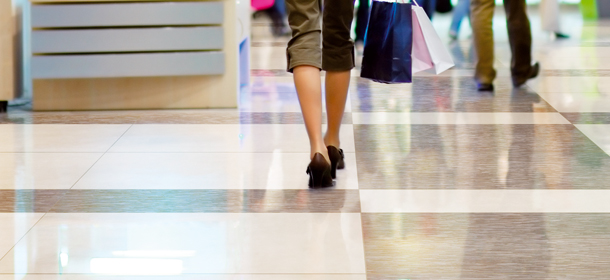
Ceramics today explore a multitude of different uses. At Cevisama this year, it was possible to walk through mock-ups of different urban environments especially created for the occasion using ceramic materials.
The TAU group was a clear leader of this trend with its Civi’s Agora, a high-tech idea for public spaces. It’s a sustainable product which is very resistant to any form of breakage and wear and tear and also has an anti-slip surface. The collection encompasses all kinds of elements found on an urban street (bollards, pavements, etc…).
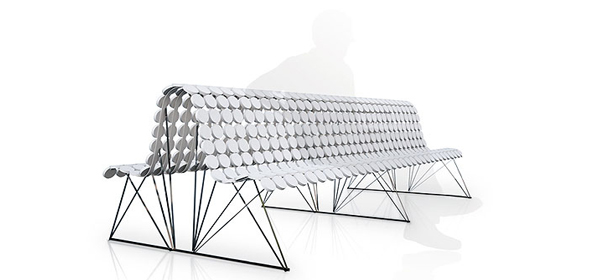
The Porcelanosa group is currently marketing collections of street furniture made of ceramic materials. Its range of products is called ARk+Elements – a collection of street furniture which includes benches, street lamps, plant holders and a whole host of products. These have been designed to give cities a touch of sophistication.
GREEN TILES
Sustainability and a preoccupation with the environment is a key concern of Spain’s ceramics industry.
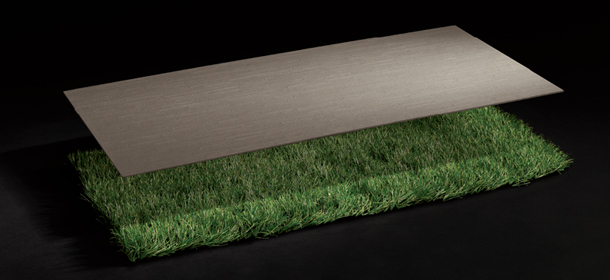
Inalco demonstrates a huge concern for the environment with its range Slimmker, a ceramic tile which is only 4mm thick. As it’s so lightweight it can be easily handled and positioned. And as it can also be self-adhesive, the stones can be quickly changed without eliminating the existing material, which avoids leaving behind rubble while pavements are being repaired.
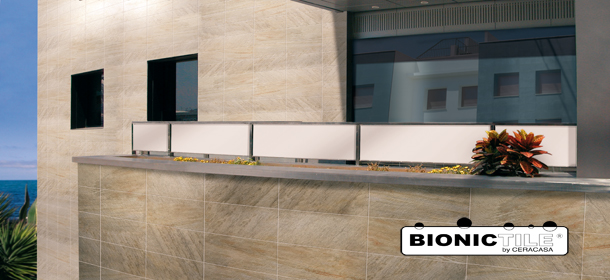
Ceracasa’s Bionictile transforms by catalysis the nitrogen oxide molecules which cars and heavy industry emit and which cause acid rain, lung disease, skin irritations and climate change, rendering them harmless thanks to the action of its UV rays contained in solar radiation.
At Cevisama, the group Roca launched its two latest Top Green porcelain ranges made of 80 per cent pre-recycled materials (materials found in Roca’s own factory rather than from porcelain already used by consumers). One of these is GreenEarth – rustic-looking paving stones in tones like ochre and brown – and GreenUrban, a smooth, ecological stone in a minimalist style equally suitable as paving or floor tiles – for indoor and outdoor use.
STONE EFECT
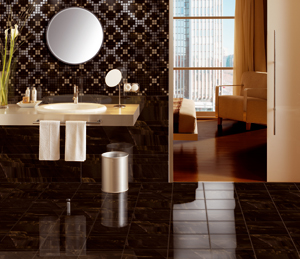
The trend for ceramic tiles simulating natural stone continues to be the height of fashion in architectural circles. These are becoming increasingly realistic and this, coupled with their unbeatable technical qualities, make the products dazzlingly spectacular.
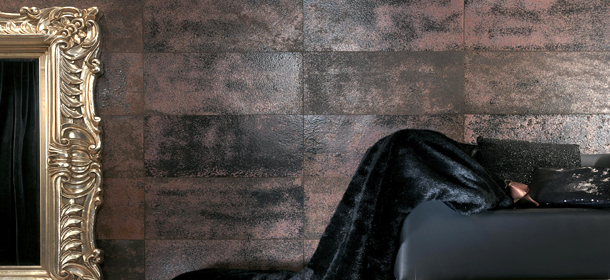
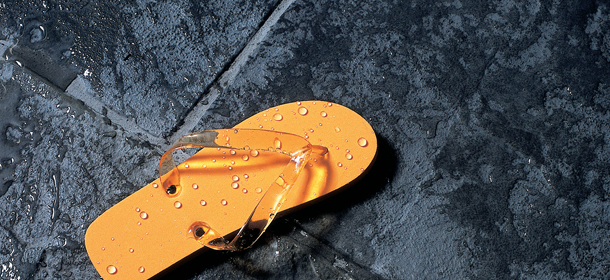
With its range Etna-Lava, the company Decorativa reclaims and embellishes one of the most ancient and noble materials on earth – volcanic lava. The resulting design boasts an array of different effects, with each piece combining shiny surfaces, shadows and textures, making it utterly unique.
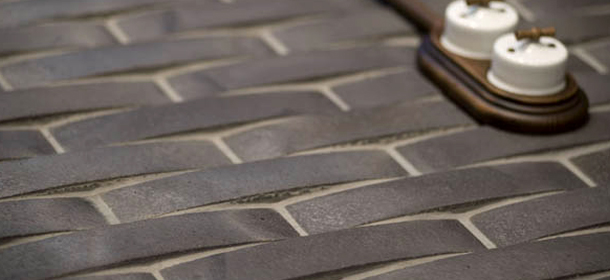
The company Gres de Breda also deploys lava and volcanic rock in its new products. Of these, Lava is a stunningly beautiful flooring tile with a thoroughly modern metallic tone, which would look equally at home indoors and outdoors. Another design, Breda Basalto, is a surface made of extruded stoneware which resembles volcanic rock. What makes this stand out is its natural textures and tones: blacks, greys and neutral metallic finishes.
On a more rustic tip is Gres Catalan’s design Stonita which marries time-honoured tradition with the most cutting-edge ceramic-making techniques.
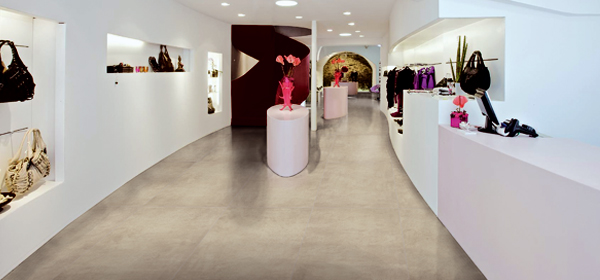
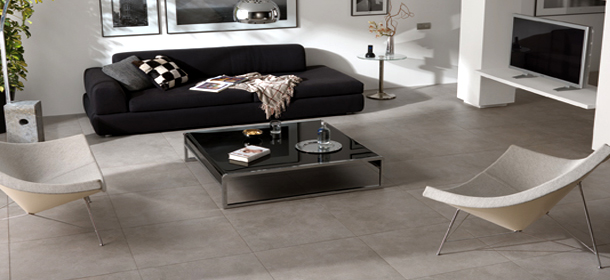
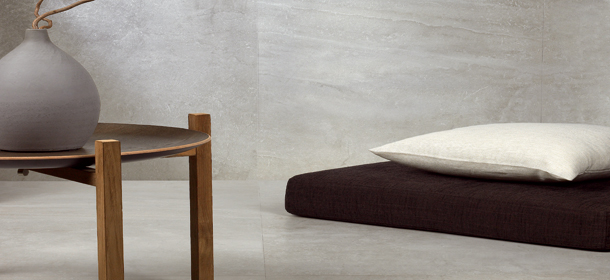
Companies like Inalco, Apavisa and Roca meet the aesthetic demands of the most avant-garde architecture today. All of them launched ranges which simulate concrete, a material which is often seen as the natural choice for projects with a strongly minimalist aesthetic.
Inalco presented its 80.2 range, Roca its design called Street, while Apavisa unveiled its product Microcement (available in four colours: grey, black, brown and beige).
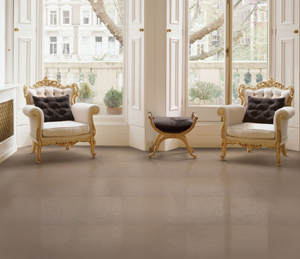
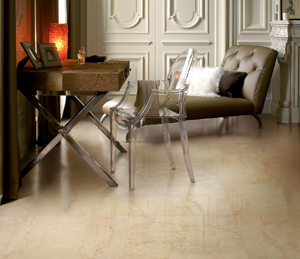
On the marble-effect front, a notable example was Grespania’s Orinoco range which conveys a sense of understated luxury with its muted colour palette of white, beige, blue, brown and salmon pink. Another eye-catching marble-effect product was Inalco’s Botticino range in polished-looking cream. Yet another – Apavisa’s Pulpis collection – takes its name from a natural stone found in the region of Castellón in north east Spain.
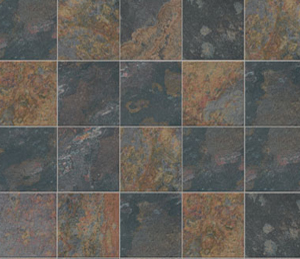
And finally, mention must be made of Saloni's Mantra range which mimics natural slate very convincingly.
REINTERPETING NATURE
Nature proved another, inexhaustible source of inspiration: landscapes, references to the animal kingdom and all kinds of natural textures burst through into the world of ceramics this season.
Natucer is part of this trend too – its ranges included Panal which resembles bees’ honeycome Anella, which references animal skin and Duna, which imitates desert dunes.
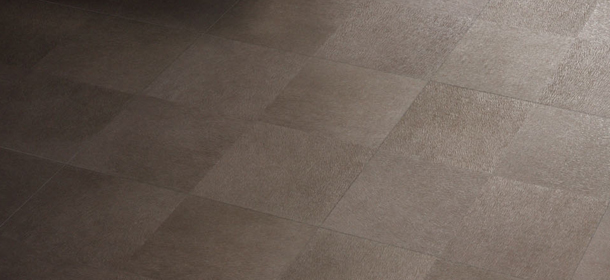
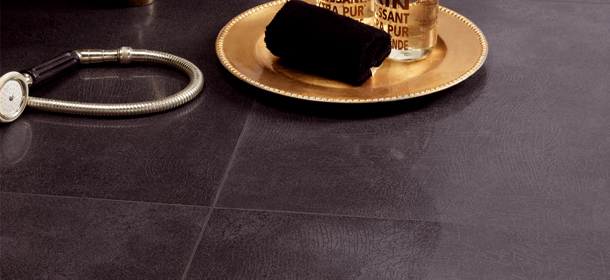
Inalco’s range Class, which has a polished or natural surface, successfully managed to resemble a young horse’s hide. Meanwhile, Grespania’s Ghana design mimics an elephant’s hard and deeply creased skin; the range also evoked the African savannah.
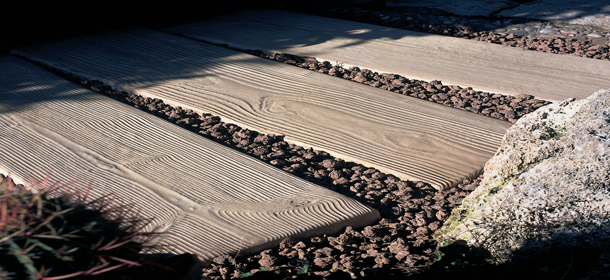
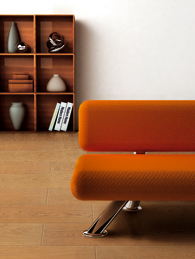
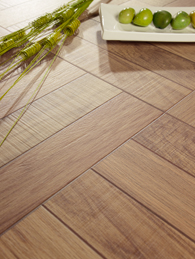
When it came to ceramics which imitate wood, Gres Catalán launched a successful simulation of wood with its range, Art Legno Arce. Vives, meanwhile, unveiled Skandia, which was based on a Scandinavian design and which is adaptable to a whole spectrum of different environments, while Azuvi launched its Natura collection.
Inalco launched an original idea with the Ginza range, a three-dimensional surface with different finishes which gives you a pleasant massage-like sensation as you walk over it. As for Apavisa, it unveiled Rovere, the maximum expression of wood with a traditional feel.
Finally, Roca, also pushing the natural theme, presented its Fierro collection, from its range called Rock&Rock.
GEOMETRICS
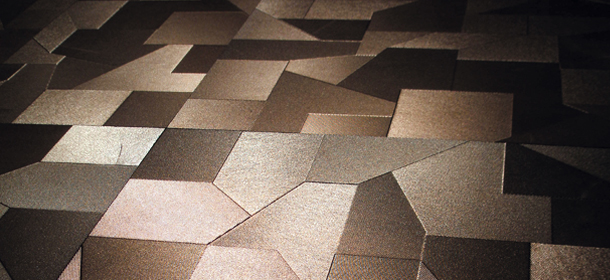
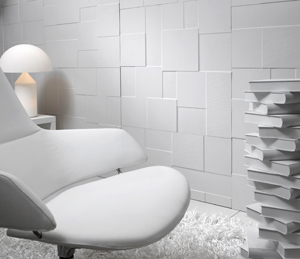
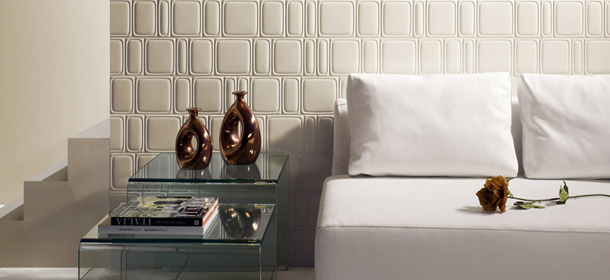
Gres Catalán’s Puzzle design was a good example of contemporary design at its most daring. Its bas-relief surface describes geometric shapes which, in combination with the different ways light hits them, emits striking optical effects, and creates the sensation of constant movement.
Keraben’s star product was Xian, which includes a geometric pattern with metallic finishes both on its paving stones and its floor tiles.
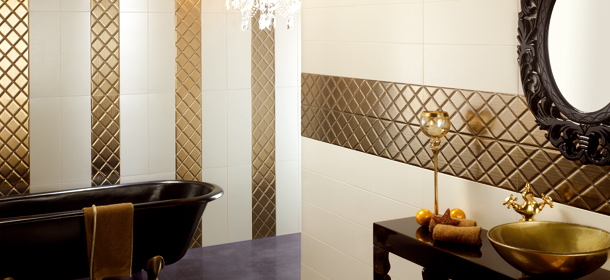
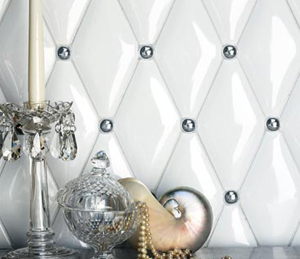
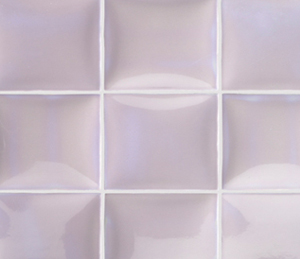
In a more classic, but still geometric, vein were the large, slightly raised lozenge shapes resembling quilting seen in the products presented by Adex and Grespania. Inalco also introduced a geometric theme in its white 80.4 range.
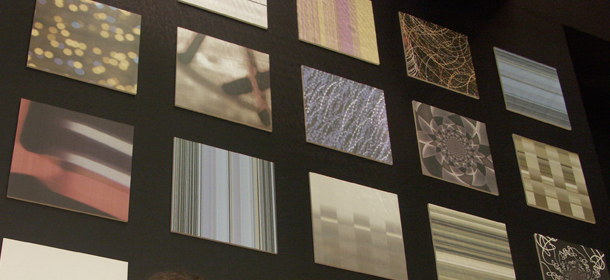
Ceracasa, meanwhile, in collaboration with the high-profile photographer Michael Banks, used ceramic material, namely its technical tile, Emotile, as the framework for an artistic work.