In early 2020, Europe awoke to the news that the first Covid-19 cases had arrived on the old continent. Since then, our way of working and relating to each other has been totally transformed. "Design" plays an important role in these changes.
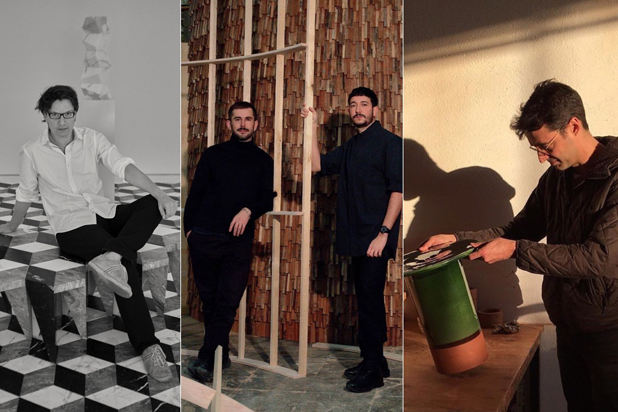
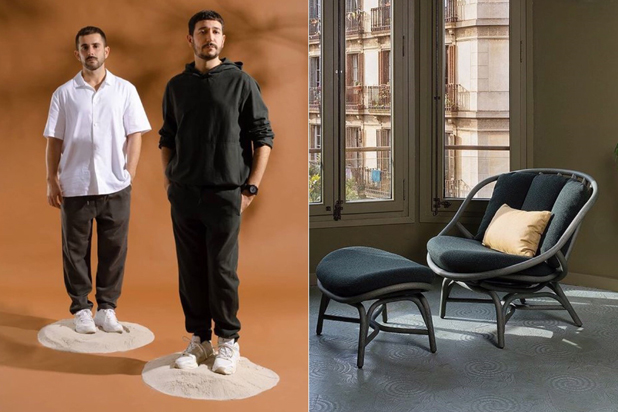
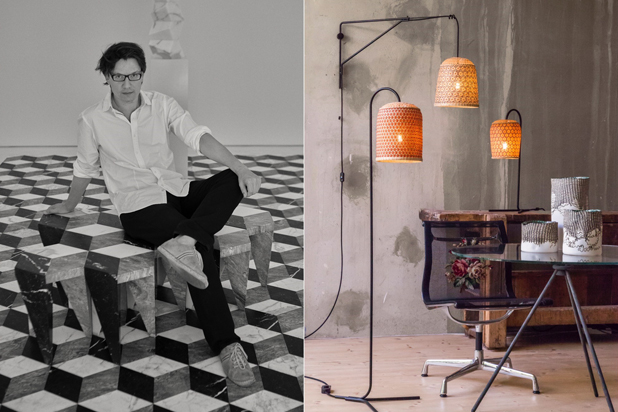
We want to share the experience of this intense year from the perspective of three Spanish designers and design studios who come from three areas of Spain where design plays a major role: Eduardo Villalón and Alberto Sánchez from Mut Design studio in Valencia, Andreu Carulla from Catalonia, and Alvaro Catalán de Ocón from Madrid. Their experiences, reflections and future projects give us an interesting perspective on how the design world has transformed over this brief period of time.
2020: crisis and reinvention
The first effect of the arrival of Covid-19 and lockdown was the restriction of domestic and international travel. The second, for the design world, was the cancellation of international fairs and events where design played a leading role. This was a major blow for most studios, as they were unable to travel and visit clients, but at the same time it pushed them to reflect and reinvent themselves.
To this end, Álvaro Catalán discusses how the cancellation of all the international fairs made him rethink the year and his team in order to plan their work for the next two years. "Fortunately, we have been able to reinvent ourselves and survive through all these months." And he leaves us with a message of optimism: "I believe that once we get out of this situation, many high quality projects will appear as a result of a calmer and more thoughtful way of working. The frenetic pace of the past meant that a lot of things had to fall by the wayside and projects were always a bit hobbled and lacking the time for that final twist."
For Andreu Carulla, the work has been similar to that of other years, but "what has changed radically has been the way it is executed at every phase, from the reception of the project to its development and presentation".
The digital future
This pandemic has caused studios to orient their teams toward "digital" activities. Discussing this change, Álvaro Catalán explains that "we had to convert part of the team to promote and sell online through social media, instead of in person at trade fairs. We thought it made much more sense to create this department from within, and we could achieve greater control by doing this in-house.” As he sees it, these channels are so dynamic that “you have to continually evolve and learn so as not to become obsolete". Although social media is a very powerful tool, due to its global capacity for communication and making yourself known, Álvaro also warns us that "there is a great risk of saturation on social media and it's now necessary to create channels that really add value and reach the audience you really want".
Eduardo Villalón points out that one of the main consequences of the pandemic was that more meetings were held online, because of the inability to travel. "We had done this in the past, but it wasn't a constant. The concept of the meeting has definitely changed, it's been a bit of a revolution and now everyone finds it natural to connect with other colleagues, clients, etc., from home or from the studio." Regarding the normalization of videoconferencing, ,Andreu Carulla adds that "it is here to stay and is saving a lot of non-productive hours", and explains that "remote working has shown us other perfectly valid ways of working".
As far as clients are concerned, Eduardo Villalón highlights two main changes during the pandemic: "Internet shopping has intensified. As people are forced to spend more time at home, and work remotely, they are thinking more about the design of their home, the furniture they want, how to make it more pleasant and comfortable" and as a result "they are investing in these improvements. In this last quarter, for example, we have noticed an increase in the royalties we receive from the sales of our products. That means that design consumption has not been affected by the pandemic, luckily for us."
Reflections on in-person trade fairs
Regarding the possibility of holding in-person international fairs this year, Eduardo Villalón thinks that "if fairs are held, we believe that, hopefully, it will be in the second half of the year, but we feel it would be complicated for the time being".
What the three designers agree on is that we cannot replace in-person trade fairs with their digital equivalent. As Eduardo explains, "there's nothing like human contact, both socially and in business". Álvaro Catalán agrees: "We don't want to stop doing trade fairs and having that direct contact with our customers, which we so value and appreciate. There is a risk of overemphasizing the more visual and superficial side of products and forgetting other qualities and details that can only be appreciated by touching and feeling them in-person."
When it comes to the future of trade fairs, Andreu Carulla questions the business model based on these large events involving huge investments. "There is the eternal question of whether they are necessary, of whether we all have to ‘dance to the beat of Milan’. The truth is that we love them and we strongly hope that Design Weeks and Design Festivals around the world will continue to be take place. But many will fall by the wayside." As an alternative, he mentions "hyperdigitization, companies being able to express and show their full potential online, so the customer can enjoy a high-quality experience from the comfort of their studio, or home, or home-studio". In the midst of these changes, Álvaro Catalán points out another trend: "over the next few years, fairs will tend to be more local".
Projects for 2021
For the Mut Design studio, led by Eduardo Villalón and Alberto Sánchez, the year 2021 begins with very good prospects thanks to the recent inauguration of the traveling exhibition "Valencia Pavilion: The Future is Design" at the Madrid Design Festival. This serves to promote the “World Design Capital Valencia 2022” campaign, and will visit different parts of the world before arriving in Valencia in 2022. They are also working on several collections for companies in Singapore, Germany, Italy, the USA and Spain, and because last year they couldn’t celebrate their tenth anniversary as planned, they are "hoping to do something special this year".
For their part, Álvaro Catalán's studio ACdO is working on a very ambitious urban planning proposal that will be tested and constructed in the studio's building. According to Álvaro, "we want to be able to tackle the issues that are currently relevant to our cities, such as 0KM food production using rooftops and promoting urban gardens, the Passive House concept and bioclimatic architecture, pollination in cities and energy self-sufficiency, among others.”
The ultimate goal of ACdO's proposal "is to close the circle of product design. To move away from classical design thinking, which is limited to the physical production of an object, toward analyzing all the aspects surrounding this activity from a more global perspective. How is that object manufactured, where, by whom, with what, how does it affect its environment on a social and ecological level, what messages does it send, etc?" To this end, their studio/building is a key part of the design process. They want it "to help offset the carbon footprint that our global activity produces as much as possible, as well as be innovative in terms of the approach to nature and self-sufficiency from the city". In addition, the studio continues to make progress on its collection of rugs made in India from recycled PET plastic bottles, for GAN.
According to Andreu Carulla, this year “as usual, we have about 15-20 projects going, furniture, lighting and industrial products, but lately we have also been working on creative direction and some interior design commissions. Despite the challenges of the pandemic and Brexit, they continue to work in Japan and the United Kingdom, and the international project that they are currently spending the most time on is in Belgium: "a collection of chocolate molds and a barista-style espresso machine".