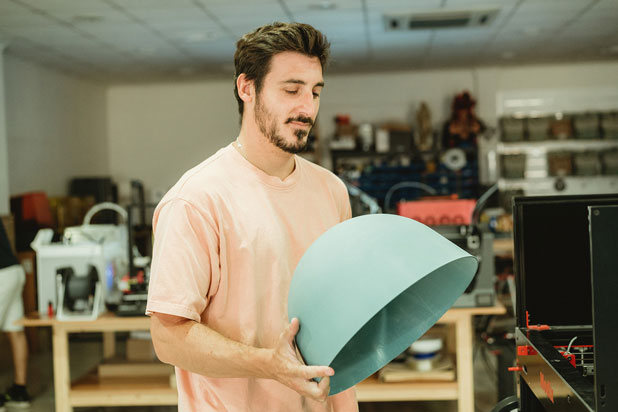
After working in various national and international firms such as Viccarbe, Marset, Oscar Díaz, Moritz Waldemeyer, and the London-based architectural lighting consultancy Light.IQ, Borja Sepulcre returned to Spain in 2022 to found the Flic studio in Valencia, focused on product design.
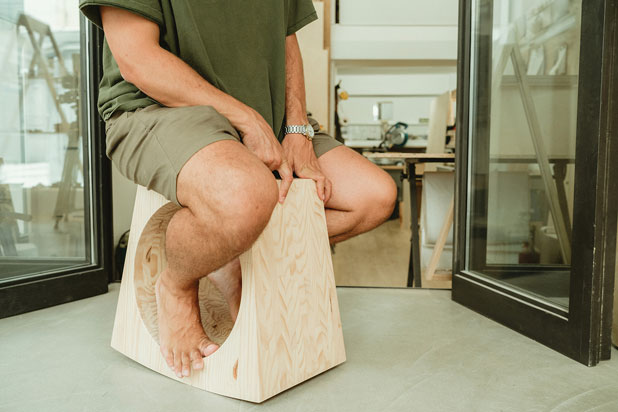
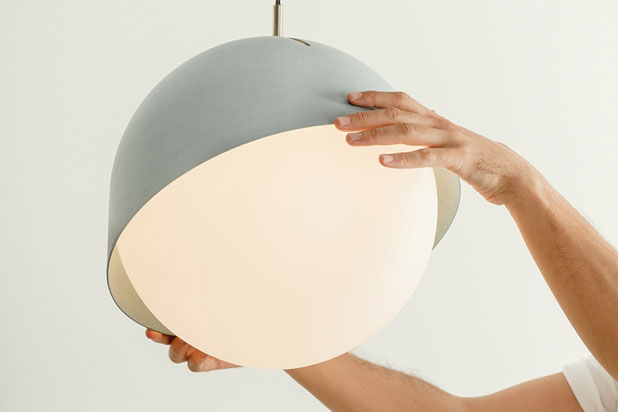
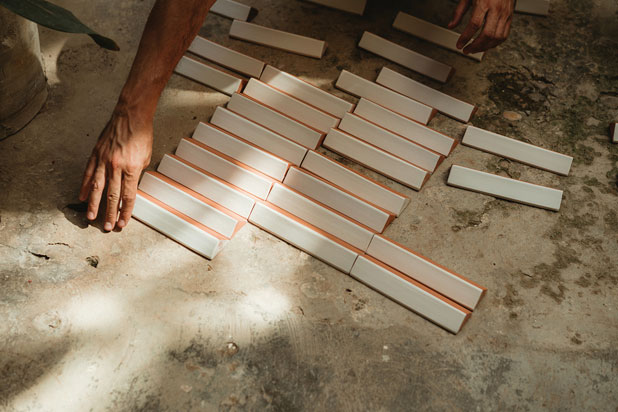
His first collection, PROTOTIPO, was made up of three pieces created in collaboration with local artisans and manufacturers: Sarab, a series of glazed terracotta tiles; Bou, a wooden stool; and Cap, a set of adjustable lamps 3D-printed with recycled material. This collection was exhibited that year at NUDE, as part of the Feria Hábitat Valencia, coinciding with the year in which the city of Valencia was the World Design Capital. The success of this presentation led to new collaborations with designers and companies, including the lighting company Massmi and Maora, an artisanal tile firm that is launching the commercial production of Sarab.
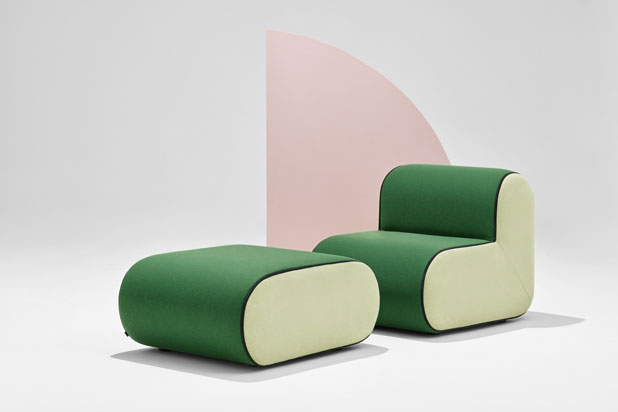
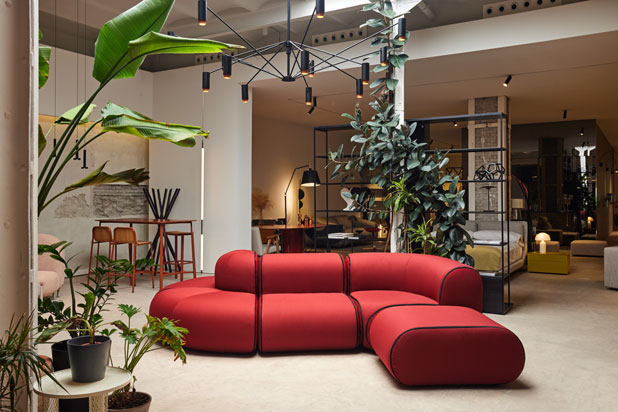
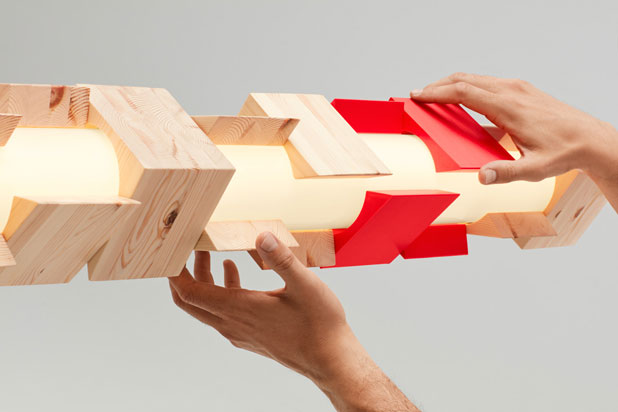
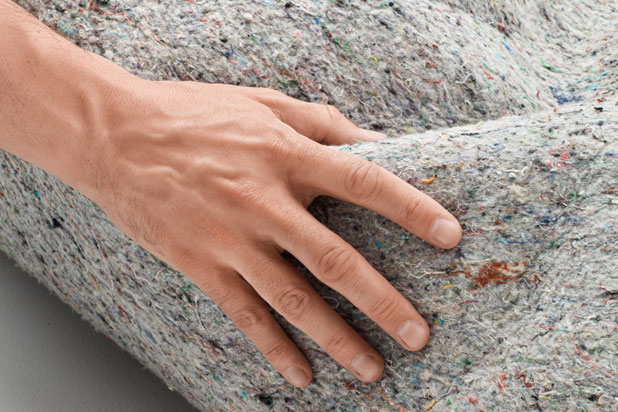
In 2023 Flic was selected to exhibit at Salone Satellite, part of the Salone del Mobile in Milan. There, the studio presented Jenga, an adjustable lighting system, and Judo, an experimental pouf developed with recycled and recyclable textiles. That same year, it collaborated with Cartonlab on Wizzle, a modular system of space dividers made with recycled materials, awarded second prize in the CETEM competition. In addition, together with the Valencian editor annud, it began the development of the Brut modular seating system, officially presented in 2024 during the Feria Hábitat Valencia.
In 2024, Flic took part in the New Talents section of the Surface Design Show in London, and in 2025, the Instituto Cervantes selected the studio for the “España Diseño Mediterráneo” exhibition at EDIT Napoli, a festival founded by Domitilla Dardi and Emilia Petruccelli, recognizing the studio as an emerging MVP in contemporary Spanish design. Borja currently combines this work with his work at LZF Lamps.
We speak with Borja Sepulcre, who tells us about the origins of the studio, his design style, his work, and his experiences in national and international exhibitions:
Interiors from Spain: How did your interest in product design arise? Was it a vocation or the result of your evolution in creating and drawing objects?
Borja Sepulcre (Flic): I suppose it was a combination of many things that led me toward design over time. Since I was a child, I have felt the need to channel my creative side through drawing, building, or any activity that involved imagining and making things with my hands. I have always been fascinated by understanding how objects are made, their materials and geometries. As a child, I was drawn to articulated figures and transparent materials, because they allowed me to see inside and discover how everything fit together. That curiosity in understanding and reinterpreting objects was the natural origin of my vocation for product design.
Interiors from Spain: Before founding your own studio, you worked for leading national and international furniture and lighting companies. What did you learn from these experiences and how did they change your way of understanding design?
Borja Sepulcre (Flic): I learned a great deal during this time. Collaborating with different firms allowed me to gain perspective and a better understanding of how industries work, their processes, and the decisions behind each product. It has also given me the opportunity to discover different methodologies and ways of understanding industrial design, as well as learning from teamwork and the people who make it possible. All these experiences help me carry out a more solid judgment and to look at design with a blend of rigor and sensitivity, understanding that behind each object there is a balance between industry, emotion, and function.
Interiors from Spain: And then you embarked on the adventure of creating your own studio. With what goals?
Borja Sepulcre (Flic): It was quite a natural process. I have always felt the need to give shape to my own ideas and to explore my personal way of understanding design. During my training, I was inspired both by the great names in design and architecture—from Aalto to Eames or the Bouroullecs—and by Spanish studios such as Yonoh or Arnau Reyna, which I admired for their authenticity and for how they collaborated with brands to create such inspiring projects. That’s how Flic was born: as a space where I could experiment, learn, and create with freedom, with no limits other than those I choose to set for myself.
Interiors from Spain: How would you define your design style? What are you trying to convey?
Borja Sepulcre (Flic): I have really begun to understand my style through the work developed more freely at Flic. Exhibiting in different contexts and receiving feedback from the public has helped me understand how my pieces are perceived. Words such as playful, interactive, architectural or emotional appear among the most frequently repeated comments, and I find it rewarding that this is reflected in my work. From my point of view, I strive to make my objects beautiful, functional, and capable of evoking emotion. I believe that design must connect with people beyond its function.
Interiors from Spain: In your portfolio we can see that you like to experiment with natural and sustainable materials. How important are materials and sustainability in your creations?
Borja Sepulcre (Flic): They are extremely important, especially in the current context. I believe that sustainability should not be understood as an added value, but as an essential condition: a starting point. Designing today means doing so in a way that is responsible toward the environment, because there can be no design without a planet. I'm drawn to noble materials for their honesty and authenticity. I like to make the most of their natural properties and, at the same time, keep an open mind to the research of new materials and processes. It's about finding a balance between tradition, innovation, and respect for the environment.
Interiors from Spain: By the way, you combine the production of your own products with designing for brands. Are you planning to maintain this line of work in the future, or to specialize in one of them?
Borja Sepulcre (Flic): Flic has just been established, and at the moment I'm open to different forms of creation and collaboration. I have self-produced some projects because it was the most direct way to bring them to life, while others have emerged in collaboration with companies such as Brut, produced with Annud; Sarab, developed with Maora Ceramic; or Wizzle, created with Cartonlab. That combination enriches me: working with brands allows me to develop concepts with a more technical and structured foundation, while my own projects give me the freedom to experiment with materials and processes alongside artisans and other professionals. In the future, I would like to maintain that balance between the industrial and the experimental, because both paths complement and enrich each other.
Interiors from Spain: Tell us about your experience at NUDE. What advice would you give to young designers exhibiting at this talent showcase to make the most of the opportunity to show their creative potential?
Borja Sepulcre (Flic): NUDE is an exceptional platform within the design scene. Flic arose there, within the framework of Feria Hábitat Valencia, and it was very special being part of such an emblematic setting in a city that has always stood out for its innovative spirit. Over the years, the fair has been coordinated by María Fontes, who has done admirable work supporting emerging talent with great dedication and enthusiasm. The most valuable part of the experience is being able to receive direct feedback from professionals in the field—architects, interior designers or designers—and also talking with students or curious visitors who bring fresh perspectives. My advice would be to indulge in the experience to the fullest: listen, share, and enjoy, because being there is already a great opportunity to grow.
Interiors from Spain: With your products you have taken part in two major design hubs such as Milan and London. What was the experience like? Did you establish international contacts?
Borja Sepulcre (Flic): The experience was very positive. Taking part in trade fairs such as Milan and London allows you to share your work with an international audience and receive direct feedback from professionals in the field, which greatly enriches your vision. Moreover, the atmosphere at these events is highly inspiring: there is constant creative energy and new ways of understanding design. I have been fortunate enough to meet people with whom I remain in contact, and who knows if collaborations may arise in the future. These experiences broaden horizons and strengthen your motivation.
Interiors from Spain: You are currently working at LZF Lamps and, at the same time, developing your own project with Flic. What is it like to combine both roles, and what does each bring to you as a designer?
Borja Sepulcre (Flic): Combining both facets is not always easy due to time constraints, but I feel very fortunate to be able to do it. The opportunity to work at LZF Lamps arose precisely thanks to Flic and to the synergies that gradually emerged around the project. I really enjoy working at LZF: it's a brand I have admired since university, and being part of its technical team allows me to grow professionally, work with different departments, and learn from a more industrial perspective. On the other hand, Flic represents my freest and most personal space, where I can research materials, experiment, and give shape to more introspective ideas. Both parts complement each other: LZF teaches me structure and method, and Flic reminds me of the essence of why I design. I would love for both paths to cross in the future in some joint project.
Interiors from Spain: What projects are you currently working on? Any outside Spain?
Borja Sepulcre (Flic): I'm currently involved in a project with a national firm, a design that emerged practically at the beginning of Flic and that we took up again a few months ago with great enthusiasm. It concerns project for which I hold a special fondness and about which I will soon be able to share more. At the international level, there are some ideas that are beginning to take shape, although it's still too early to finalize them. What matters now is to continue strengthening Flic’s identity, moving forward with confidence and seeking collaborations that share the same sensitivity toward design and well-crafted processes. I’m open to projects that allow me to keep growing and adding value from an honest and conscientious perspective. I believe design makes sense when it manages to improve what surrounds us, and that is the path I want to keep building with Flic.