

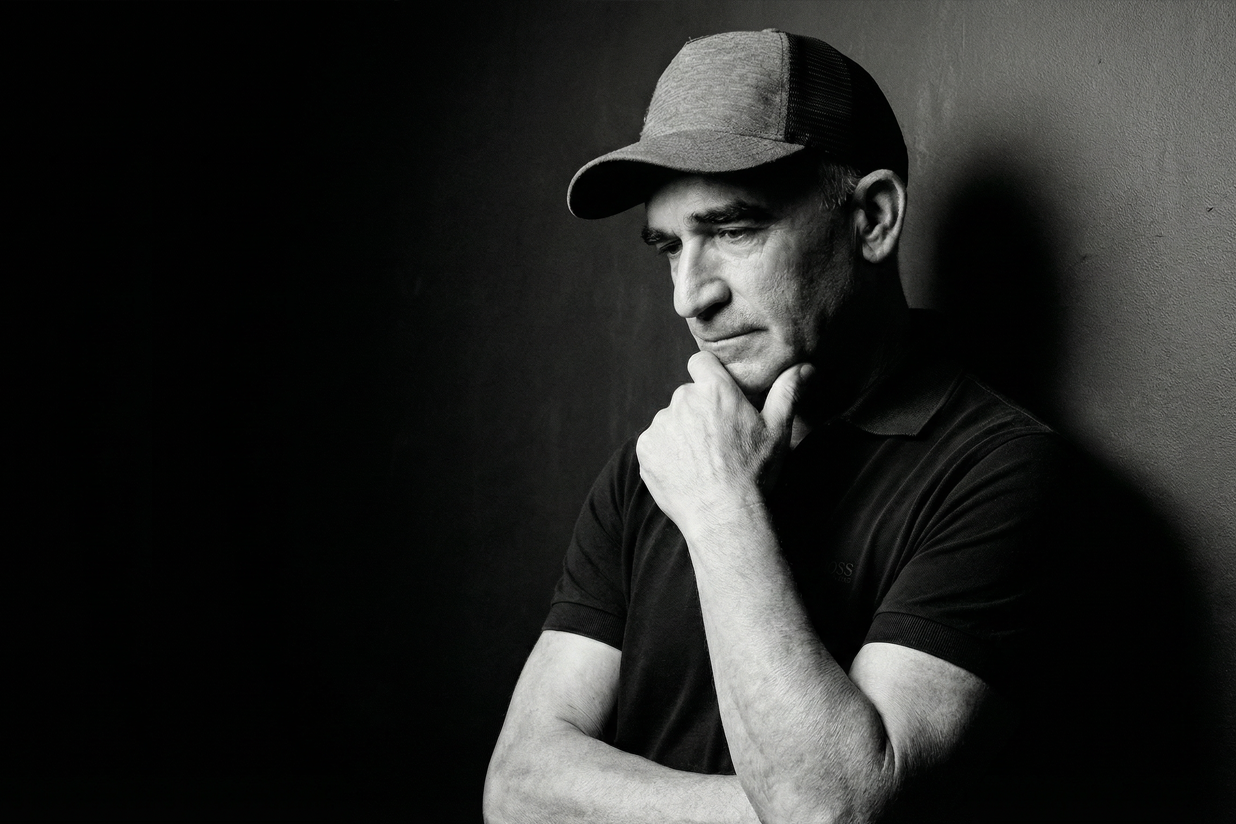
Aitor García de Vicuña - AGVestudio
Honest design born of intuition, analysis, and passion
Honest design born of intuition, analysis, and passion
08/03/2012
Silo Studio: Art, craft or design?
06/22/2012
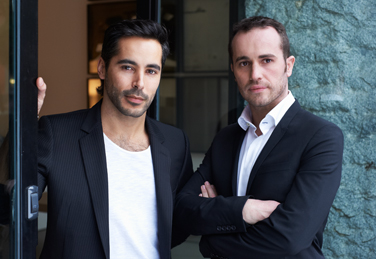
Cuarto Interior studio
Cuarto Interior is situated in Chueca, Madrid, a cosmopolitan yet very typical area of the city, located at its centre. Cuarto Interior’s members are José Manuel Fernández and Germán Álvarez, two young architects who, in 2003, joined forces to set up this interior design studio, which today has eight employees. Germán is its creative director, and is in charge of the initial development and conceptualisation of projects. José Manuel takes care of the technical side of the company and its business development.
05/25/2012
CrousCalogero – feelgood creativity
CrousCalogero is a Barcelona-based product design studio co-founded by Francesc Crous and Alessandro Calogero, industrial design graduates of Barcelona’s art and design school Eina, Escola de Disseny i Art and Politecnico di Milano respectively. Both designers were collaborating individually with renowned international design studios until their career paths crossed one day at bathroom company Roca’s Roca Innovation Lab in 2006. And, in 2009, they co-founded their own Barcelona-based studio.
02/23/2012
We discover Enblanc
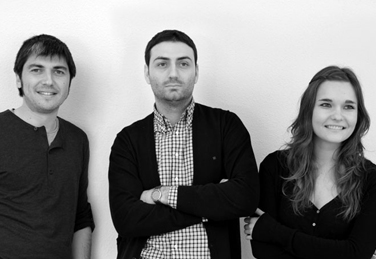
Set up in 2007 by Jose Aranda y Paula Aloy, Enblanc is a studio combining design, graphic design and branding. Carlos Velasco is also part of the team. Since 2007, it has undertaken industrial design, branding and interior design projects on an international scale. Its ideas are always practical, simple and cohesive.
01/25/2012
3patas – new values
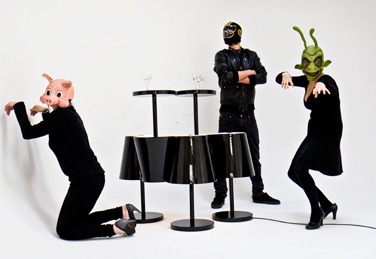
The story of 3Patas begins much like that of other design studios: three friends who decided to undertake a project together – in this case Carla Neila, Santiago Hermosín and Isabel González, who first met while studying for their MA at Elisava, Barcelona’s design and engineering college. Before embarking on this joint venture, each designer had learnt their craft in well-known studios and companies in Spain. Their first big success as emerging designers was to be named finalists on entering their modular shelving system called Teja2, Curva2 in the international furniture competition called CETEM (organised by the southern Spanish region of Murcia). The trio now had a product to present at fairs. In conjunction with three potential ideas for lamps (called La Vuelta, Magic Box and Tree), this allowed them to exhibit their work in 2010, along with other young designers, at Superstudio Piu, one of the best-known venues in Milan during its annual prestigious furniture fair. Since then, these three have worked in different fields of design, creating products, exhibition stands, interior design and corporate branding. In 2011, they were invited to take part in the Nude exhibition (a showcase for young designers), held at the Valencia design trade fair, Feria Hábitat Valencia. The studio 3patas strives to innovate while cultivating the warmth and collective creativity which makes its products appealingly human. We took time to chat with this trio, who are bound to generate a buzz in 2012. Interiors From Spain: Why the name 3patas? 3patas: Because the words connote a flat surface; three legs give you stability. Every piece of furniture requires at least three legs. IFS: What contribution do you think a new studio like yours makes to the Spanish design scene? 3patas: Thanks to the technical know-how we’ve acquired through our training, the companies we work for benefit not only from interesting concepts but from products which are totally viable in terms of being able to be put into production, from their conception to their manufacture.What’s more, our designs aim to break away from clichéd formulae, depart from the established and push the boundaries of what their clients and their consumers want in ways that – pleasantly – surprise them both.At a project’s conceptual stage, we three members of the studio all join in. After that, only one of us oversees a product’s development; the others take on different tasks. One thing we’ve learnt is to divide up the work. Initially, we all wanted to be involved in everything but we’ve learnt to delegate and to trust each other to do whatever they’re doing well. IFS: What’s your preferred working method? What inspires you most? 3patas: When developing a concept, we try out different working methods. Normally this entails various brainstorming sessions which take into account any restrictions imposed by the brief we’ve been given, in particular those relating to the end user or consumer, the environment the product’s intended for as well as the specific company’s position in the market.As well as certain design classics from other decades and many 20th-century art movements, we are of course inspired by designers working today. Above all, we’re inspired by everyday things, by tiny details we observe from day to day and by human behaviour. We’re also very inspired by nature. We’re very much urbanites but whenever we go on excursions – or forays into untamed nature – we come home brimming with ideas, energy and with great enthusiasm for initiating new projects.We’re also influenced by our travels to different European capitals. We’ve all lived in different places, including Madrid (where the three of us have lived), London and Venice, while we often travel to trade fairs in such cities as Milan and Stockholm. This, combined with the fact that we live in Barcelona, a city full of people from abroad, has made our work and our team increasingly international. IFS: What, during your brief career to date, has participating in international trade fairs meant to you? 3patas: Both Spanish and international fairs involve a massive dissemination of information through many communication channels, which we value hugely as a way of promoting our studio. IFS: How do you get your products manufactured? Have you collaborated with any big companies yet which have done so? 3patas: We never waste our ideas. Rather than put them away in a drawer if they’re not initially taken on – because a manufacturer we’ve designed them for turns them down or because it doesn’t meet our conditions or production deadlines – we offer them to another company. We even try to sell ideas we’ve presented for competitions to companies in the hope they’ll manufacture them, provided that we think they fit in with their portfolio and their market.We’ve landed many projects which we thought would come to fruition but don’t because, today, companies aren’t prepared to take many risks. They prefer to make decisions based on very careful calculations of the risks involved.At the moment, we’re marketing the 3x3 table, manufactured by Francesc Ros, a cabinet-maker which normally makes made-to-measure furniture to commission but which has branched out into mass-production in conjunction with us. We’re really grateful to them for their bravery and for the trust they’ve put in us in these straitened times.In addition, legendary Barcelona ironmonger Server Estació makes and distributes our Ola! shelving unit.And lighting company Dresslight will show two families of lights using Swarovski crystals and created by us at the next Frankfurt lighting show, Light& Building 2012, in April.We’ll also be bringing out some sleeves for iPads and iPhones, designed for the company Nooem, very soon. IFS: Can you tell us what projects you’re currently working on? 3patas:We’re finalising the details of our first interior design project for a restaurant in Barcelona. We’ve designed most of its furniture and all of its lighting.At the next Stockholm furniture fair in February, we’ll be unveiling an outdoor space divider called Voyeur. And we’ll be launching our collection Worley – a table and lamp created for an apartment in the trendy Eixample area of Barcelona – very soon.We’re also working on the 3x3 table’s little brother – a smaller table called the 3x3 Oval, whose price is adjusted accordingly.Finally, we’re exploring new areas of design such as household goods and dinner services, but these are at such early stages we can’t divulge any more!
08/09/2011
Javier Mariscal – emotional design
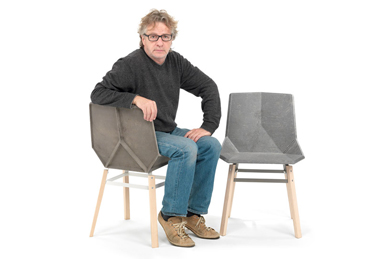
Javier Mariscal sees himself as an image-maker. These images are then developed into products in different media and disciplines – in fact, there are so many it’s easy to lose count of how many there are. His projects include graphics for shops, interior design, sculptures, landscape painting, illustration, even feature films. The designer perhaps most famous for his unforgettable Olympic mascot, Cobi, for the 1992 Barcelona Olympics, is indefatigable. For the past 30 years, Valencian-born Mariscal, who lives in his adopted city of Barcelona, has designed in an irreverent, fun, playful, occasionally provocative way – firstly on his own and, since 1989, as part of a team. Estudio Mariscal employs 22 people – administration personnel, graphic and industrial designers, architects, IT specialists and audiovisual technicians – and collaborates with many others on individual projects.